Iyer Wedding Photography
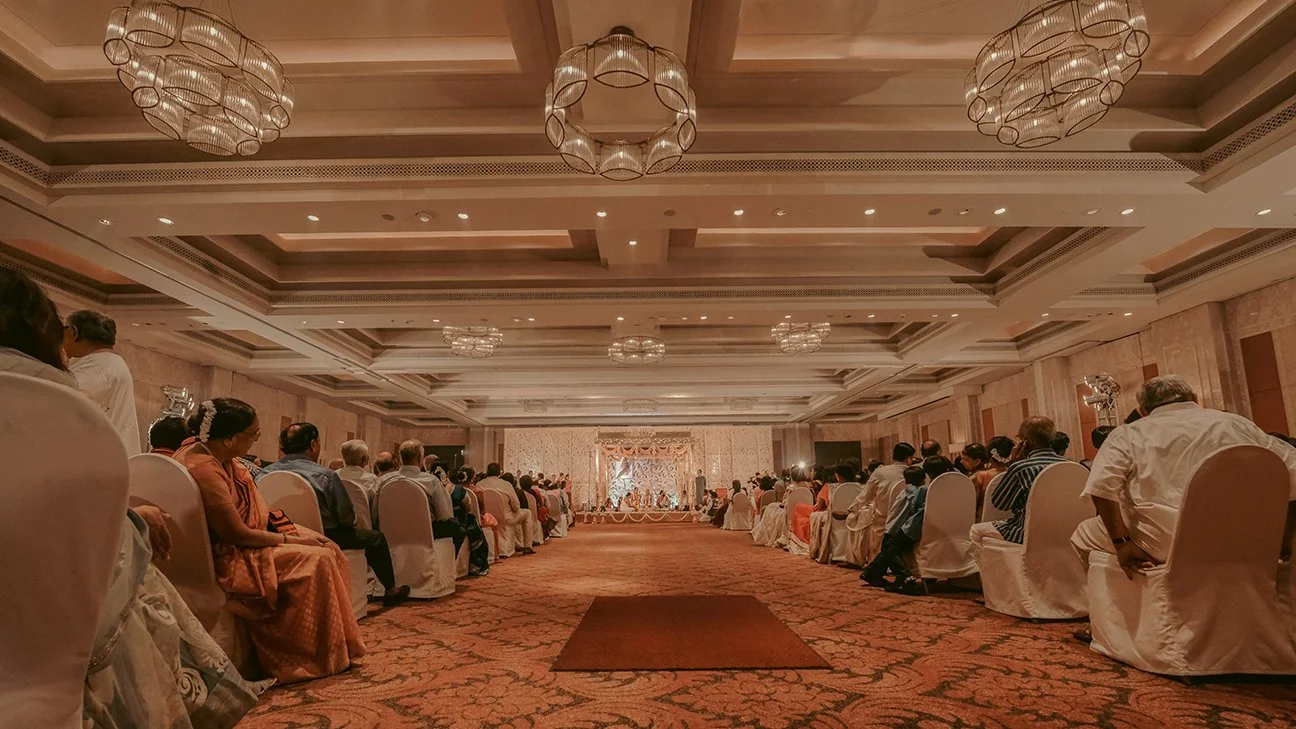
Iyer wedding photography is customary hindu marriages that are mostly observed by the Iyer community, a group of Tamil-speaking Brahmins who adhere to Adi Shankaracharya's Advaita doctrine. These marriages, which frequently take place over several days with distinct ceremonies at each stage, have their roots in Vedic customs and ritual purity.
Pre-Wedding Rituals (1–2 Days Before the Wedding)
1. Nichayathartham (Engagement Ceremony)
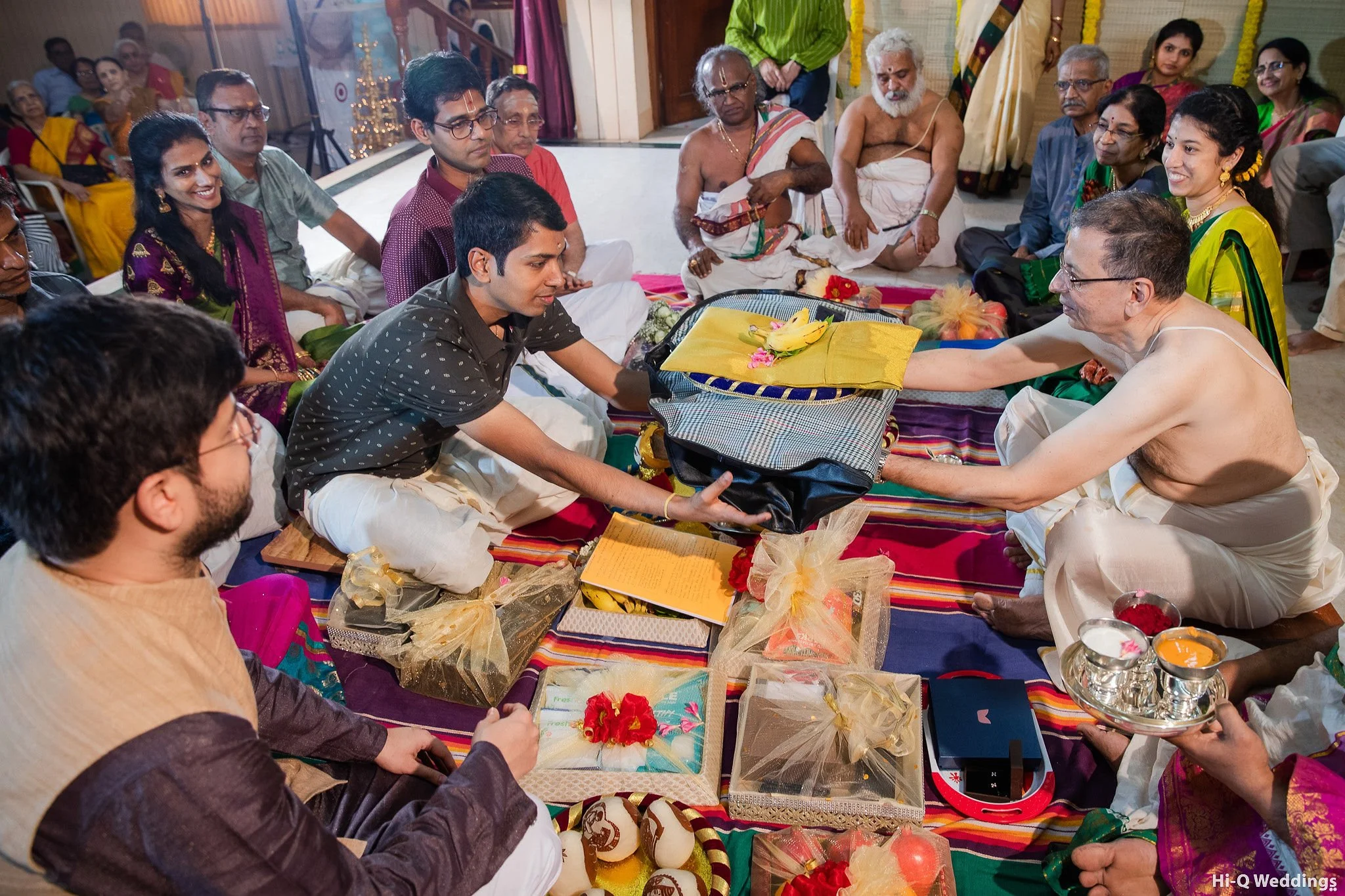
An agreement between the families of the bride and groom that essentially signifies a commitment to marriage.
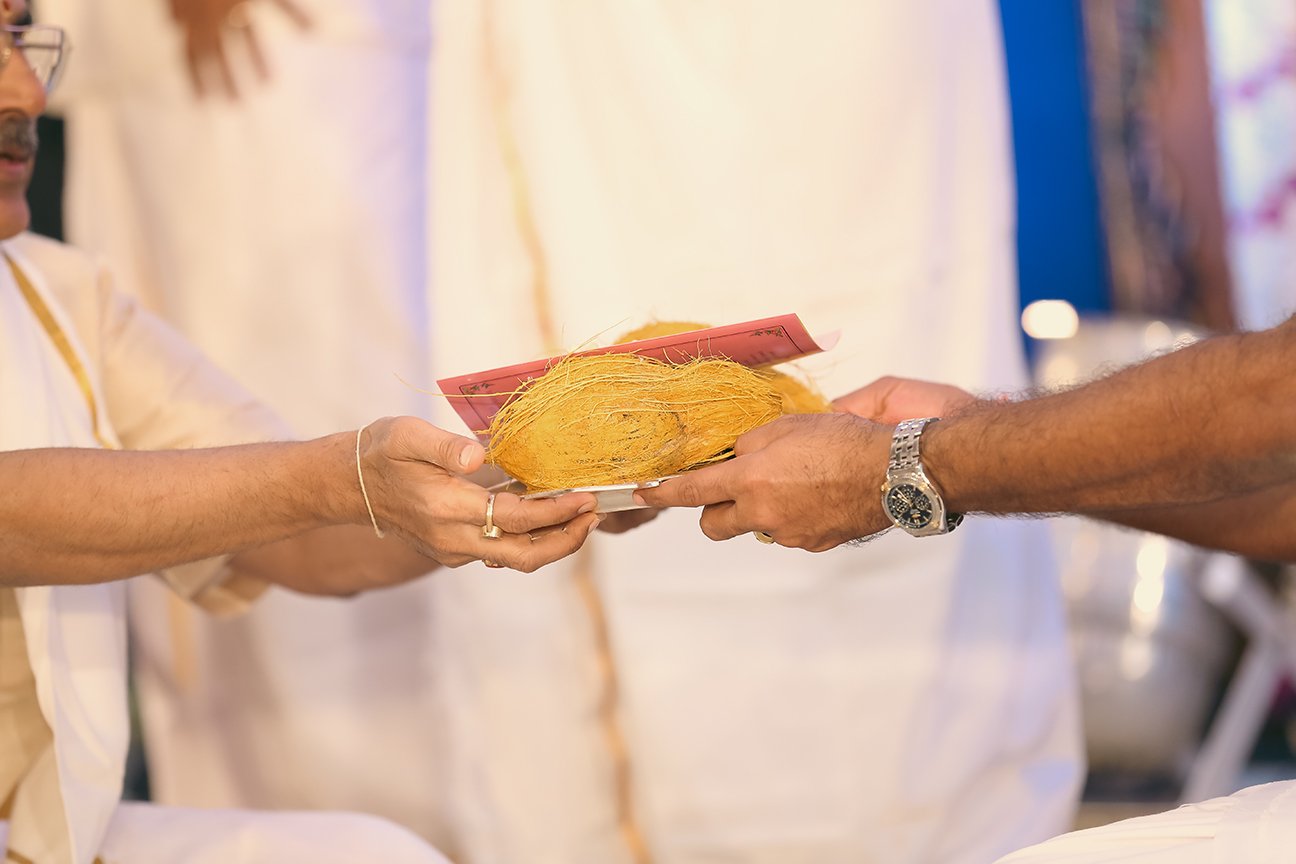
Families exchange garlands with the bride and groom, including betel leaves, flowers, betel nuts, and other items laced with turmeric.
After deciding on the wedding day and time muhurtham (auspicious time), an iyer reads the wedding slogans.
2. Sumangali Prarthanai
Arranged by the bride's family to request blessings from deceased female relatives who had moral lives and married women, known as Sumangalis. This essentially means that the bride will live her life similarly to that of the Sumangalis, who came for her, and it also forges a connection with them.
A group of five or seven married women and a girl, representing future generations, receive gifts and meals. Since receiving a present on a particular day is something that cannot be forgotten, the meals or gifts that the girl receives essentially establish a personal relationship.
3. The Ceremony of Paligai Thellichal (Sprouting)
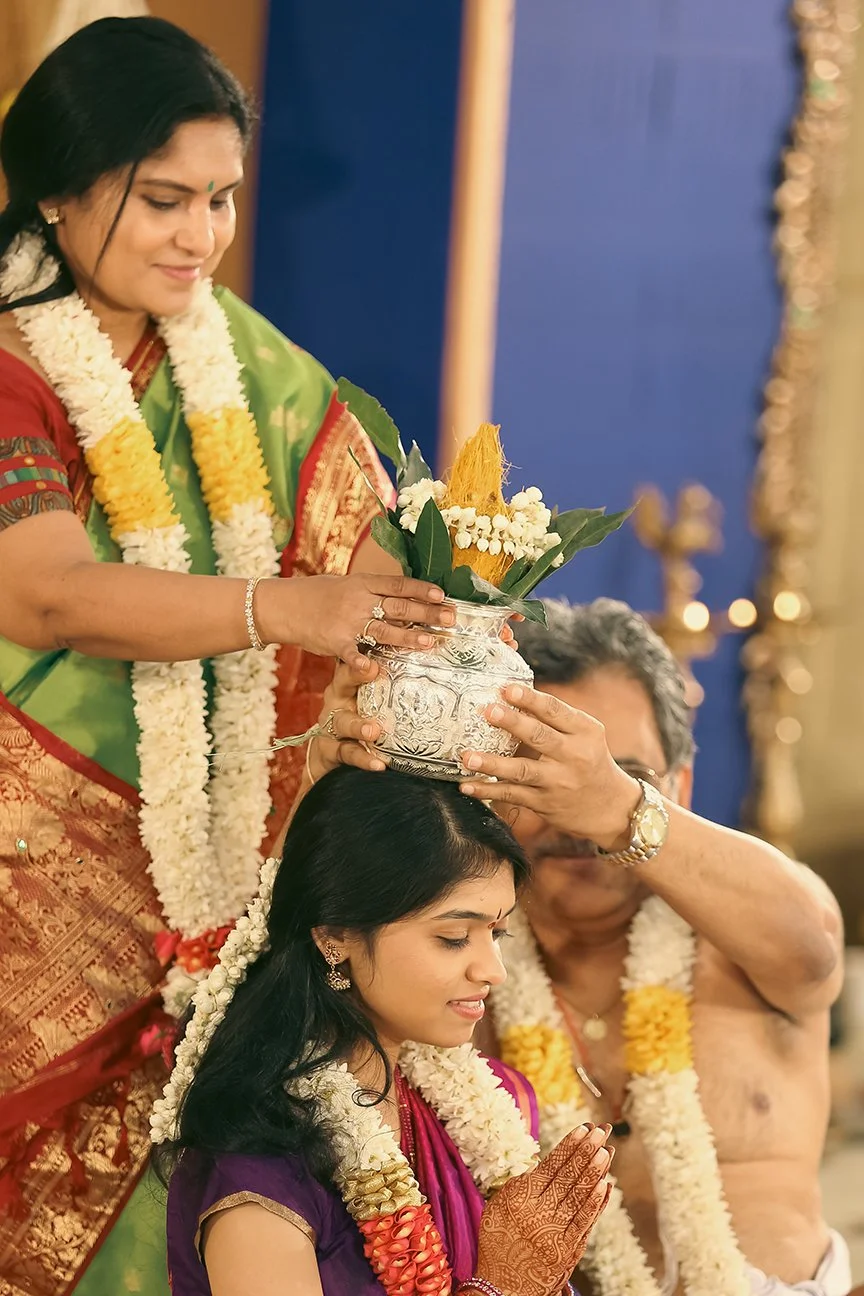
Married women fill clay pots with nine varieties of seeds (Navadhanyam).
watered daily till the wedding to symbolize the fecundity and growth of the new marriage.
These sprouting grains are then submerged in water bodies and offered to nature.
4. Kashi Yatra (Mock Renunciation by Groom)
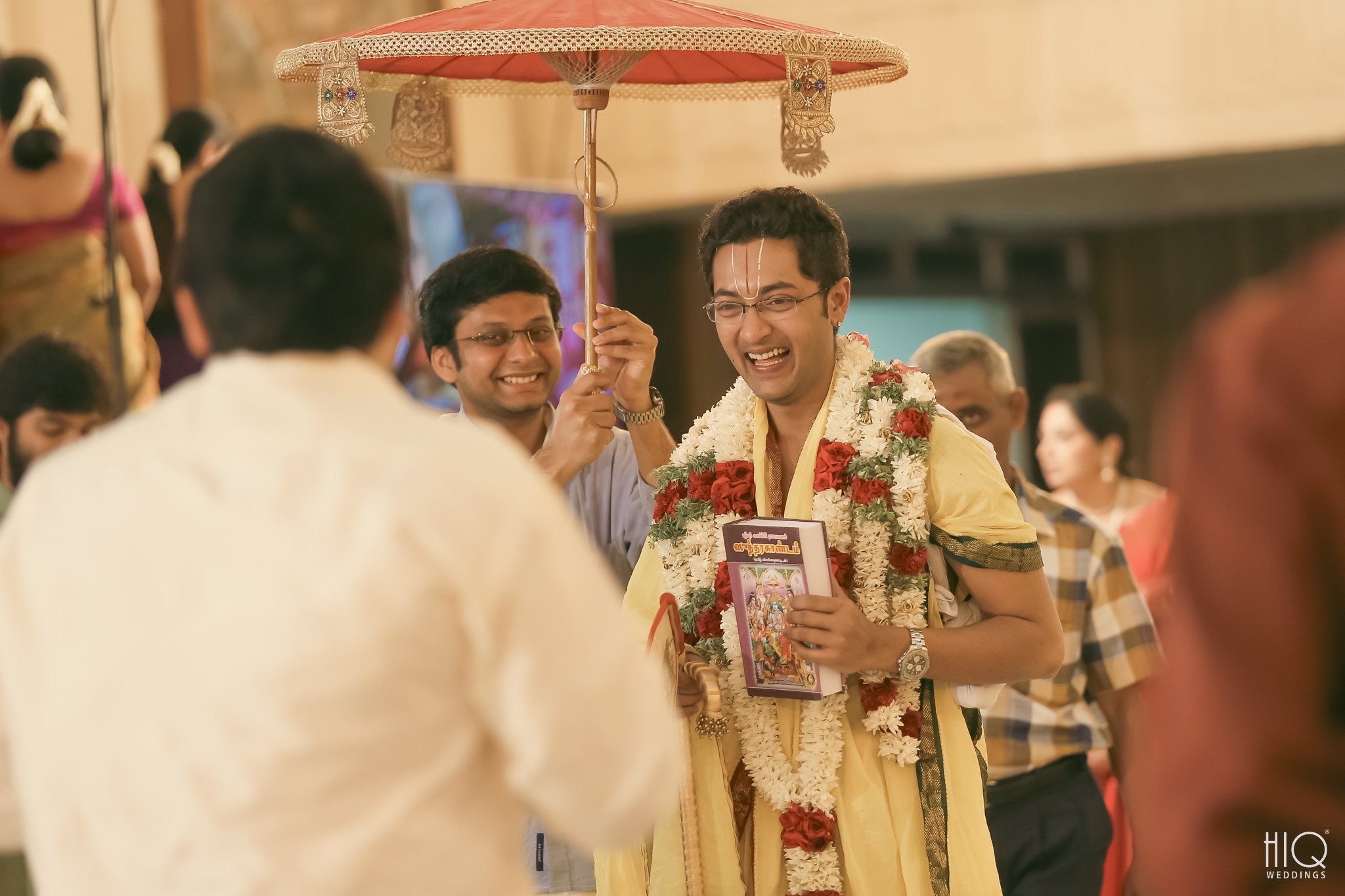
In this symbolic act, the groom journeys to Kashi (Varanasi) and feigns to give up material possessions in order to become a sanyasi (monk).
The groom is stopped by the bride's father, who offers his daughter's hand in marriage and reminds him of his responsibilities as a householder (Grihastha Ashrama).
Although this tradition is lighthearted, it symbolizes embracing family life on a spiritual level.
Day Before the Wedding
5. Panda Kaal Muhurtham
Simple pooja conducted at the wedding venue or at the homes of the bride and husband.
It is a prayer for the wedding events to run smoothly and without any problems.
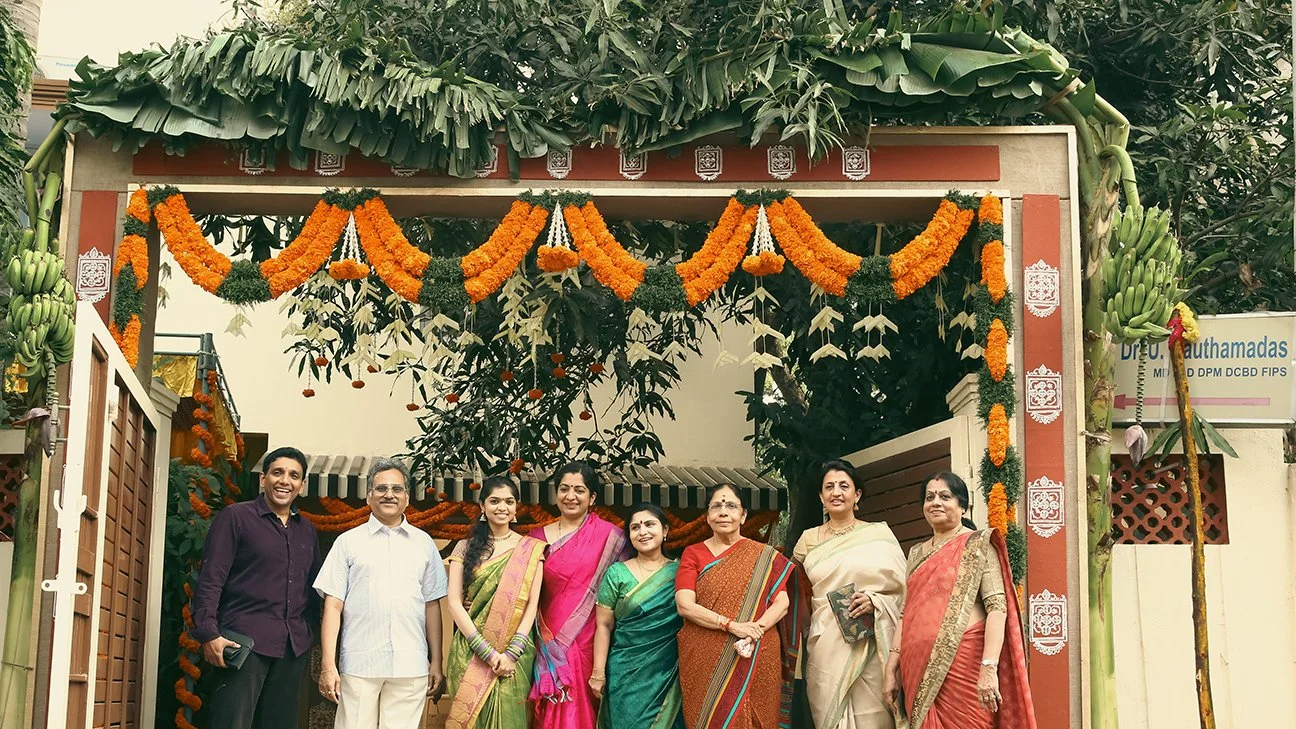
For prosperity, a bamboo pole is placed next to the entrance and covered with mango leaves and banana stems
6. Vratham (Sacred Vow)
The groom marks the start of his new stage in life by engaging in an homam (fire ritual) and wearing a sacred thread (Poonal).
To keep off evil until the wedding is over, both wear Kaapu, or sacred yellow thread, attached around their wrists.
7. Jaanavasam (Groom's Procession)
After the groom is driven in a decorated car to the wedding hall, there is music and celebrations.
At the gate, the bride's family greets him with Aarti, signifying his acceptance into the family.
According to certain traditions, this occasion serves as a public proclamation of the wedding.
Wedding Day Rituals
8. Mangala Snanam (Auspicious Bath)
Both the bride and groom are bathed in a turmeric-infused holy oil at their homes.
Before the holy rites, a religious wash is taken to purify the body and mind.
9. Kashi Yatra (Re-enacted Publicly)
Repeated again on the wedding day, more elaborately and in front of guests.
Symbolizes the groom’s willingness to become a householder and accept marital responsibilities.
10. Maalai Maatral (Garland Exchange)
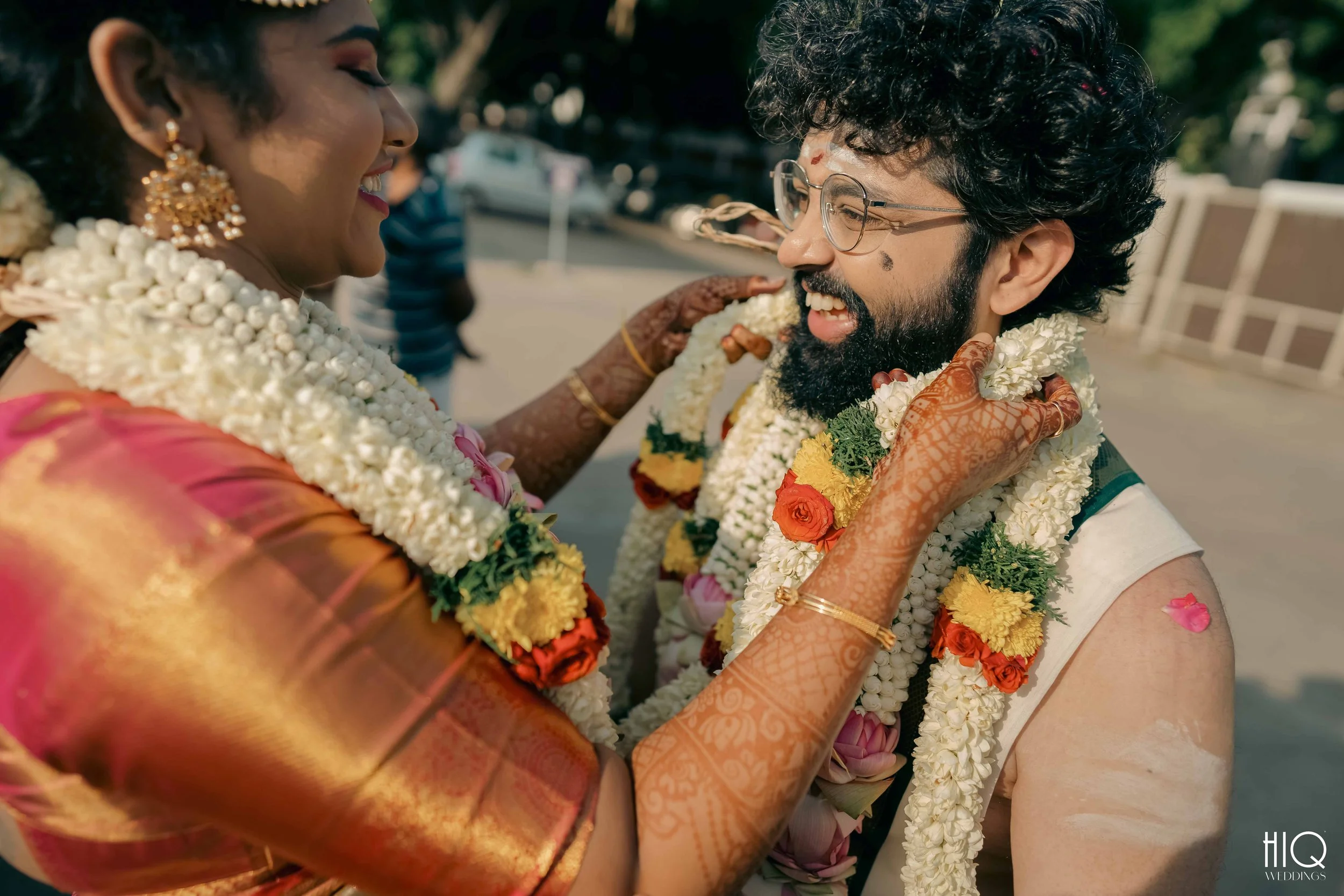
The bride and groom exchange flower garlands three times, symbolizing acceptance.
Family members lift them playfully to prevent easy garlanding, adding a fun and joyous element.
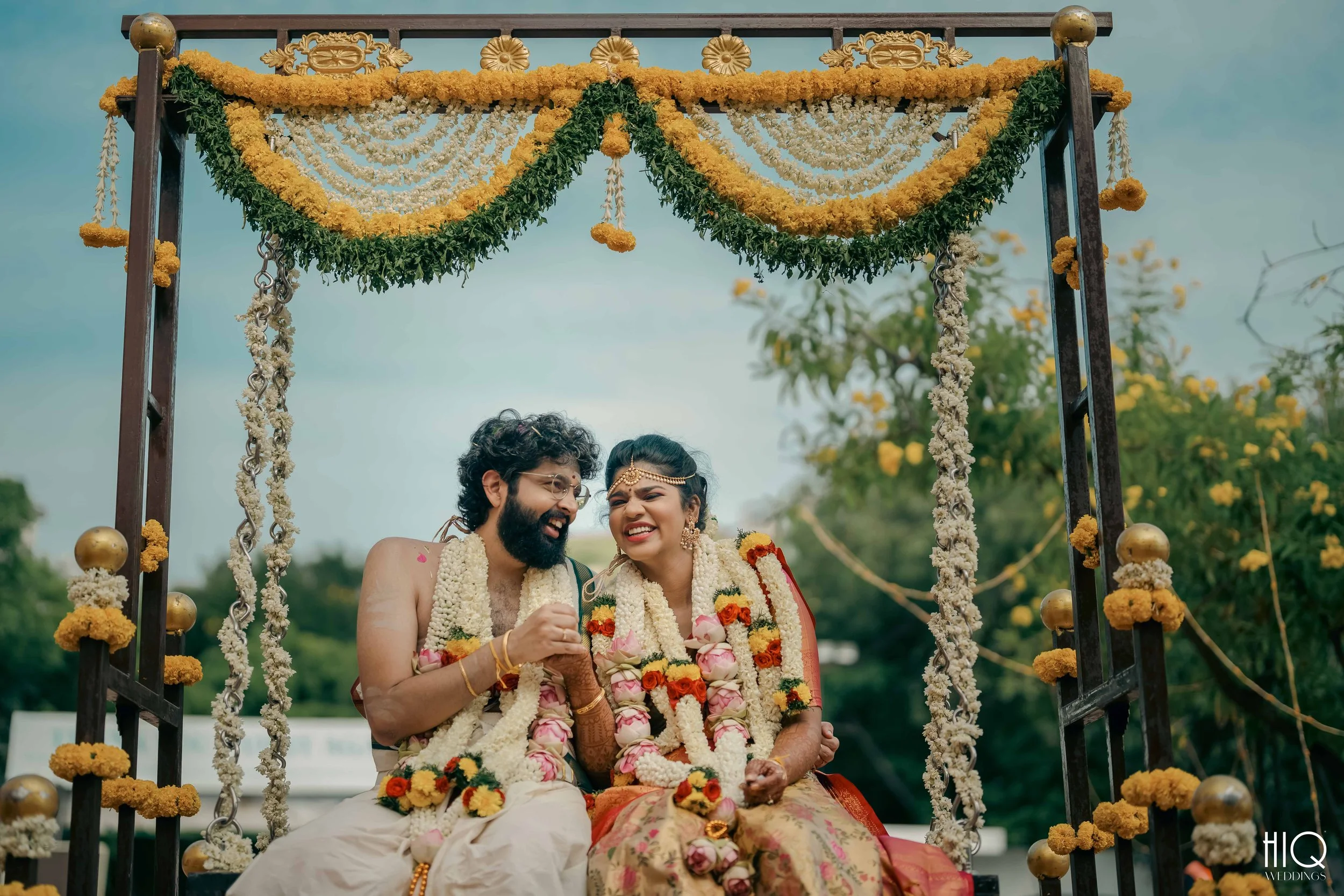
11. Oonjal (Swing Ceremony)
The couple sits on a beautifully decorated swing, gently rocked by family
Elders feed them bananas and milk, signifying sweetness and nourishment.
Colored rice is circled and thrown to ward off the evil eye.
12. Kanyadaanam (Giving Away the Bride)
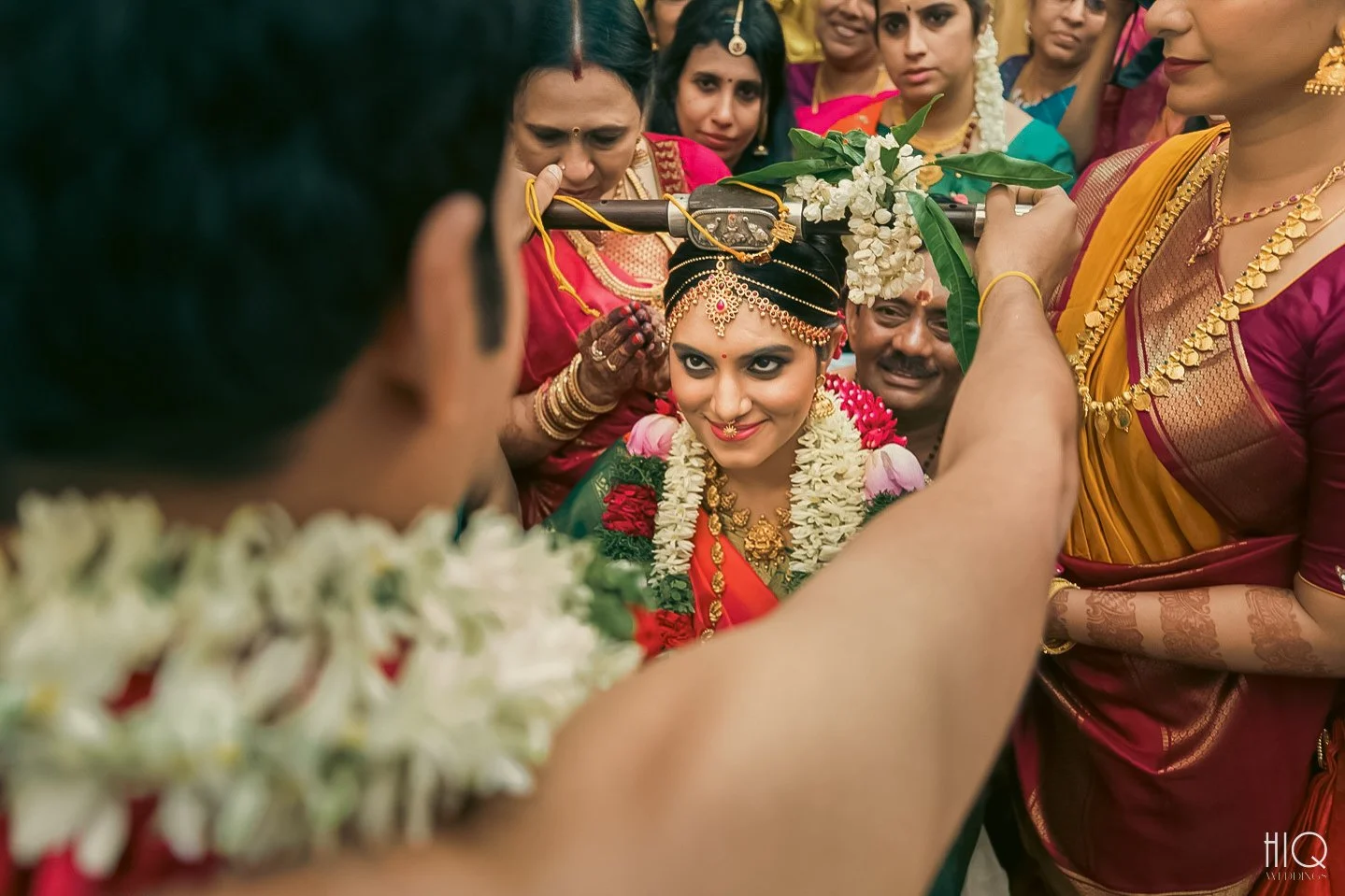
One of the most sacred rituals. The bride sits on her father's lap, facing the groom.
Her hand is placed in the groom’s, and water is poured over to symbolize transfer of responsibility.
The father formally gives his daughter to the groom with Vedic chants.
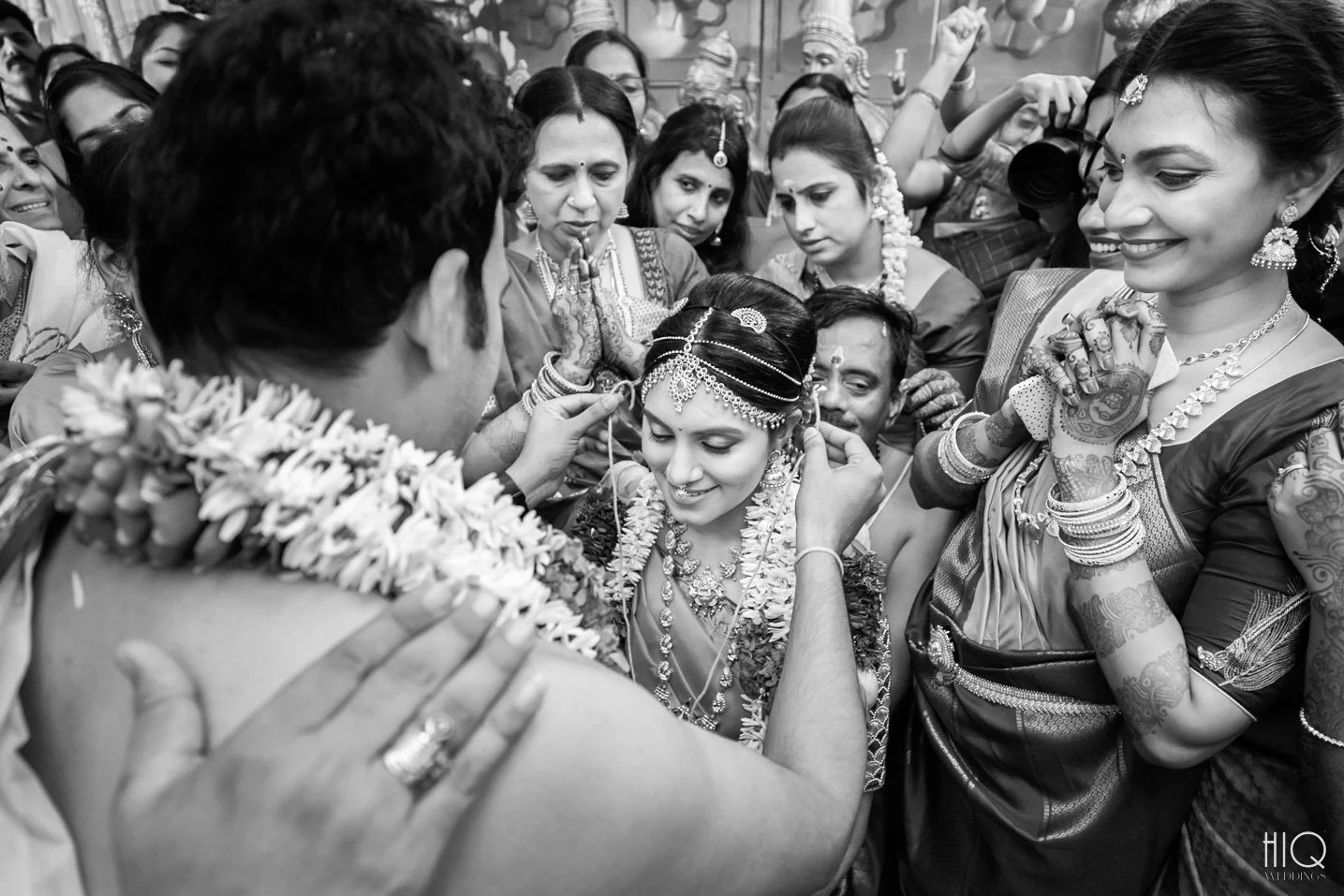
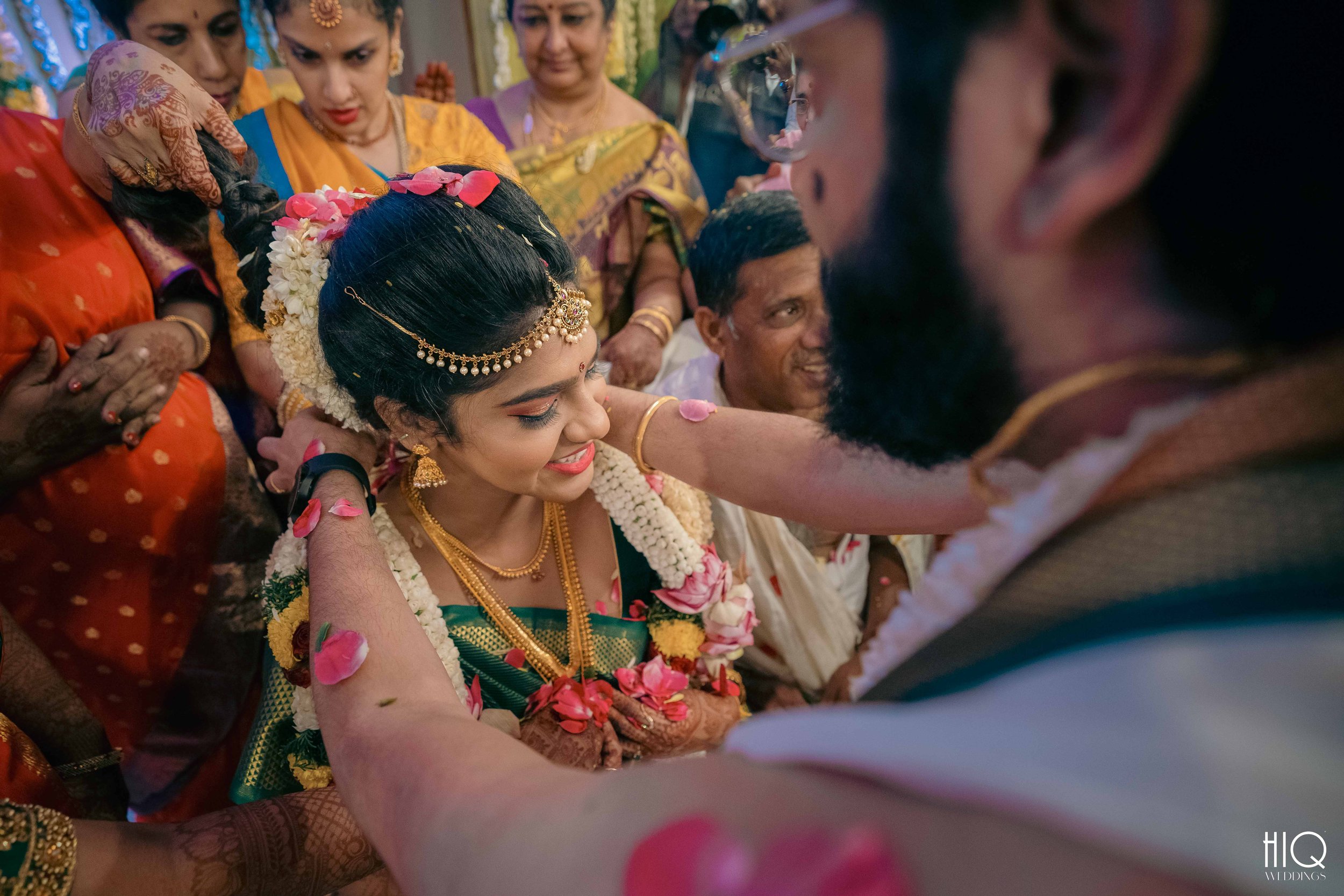
13. Mangalya Dharanam (Tying the Sacred Thaali)
The highlight of the ceremony. Groom ties the Mangalsutra (Thaali) around the bride’s neck in 3 knots.
Each knot represents a bond of mind, body, and soul.
Conch shells are blown, and sacred music is played to mark the moment.
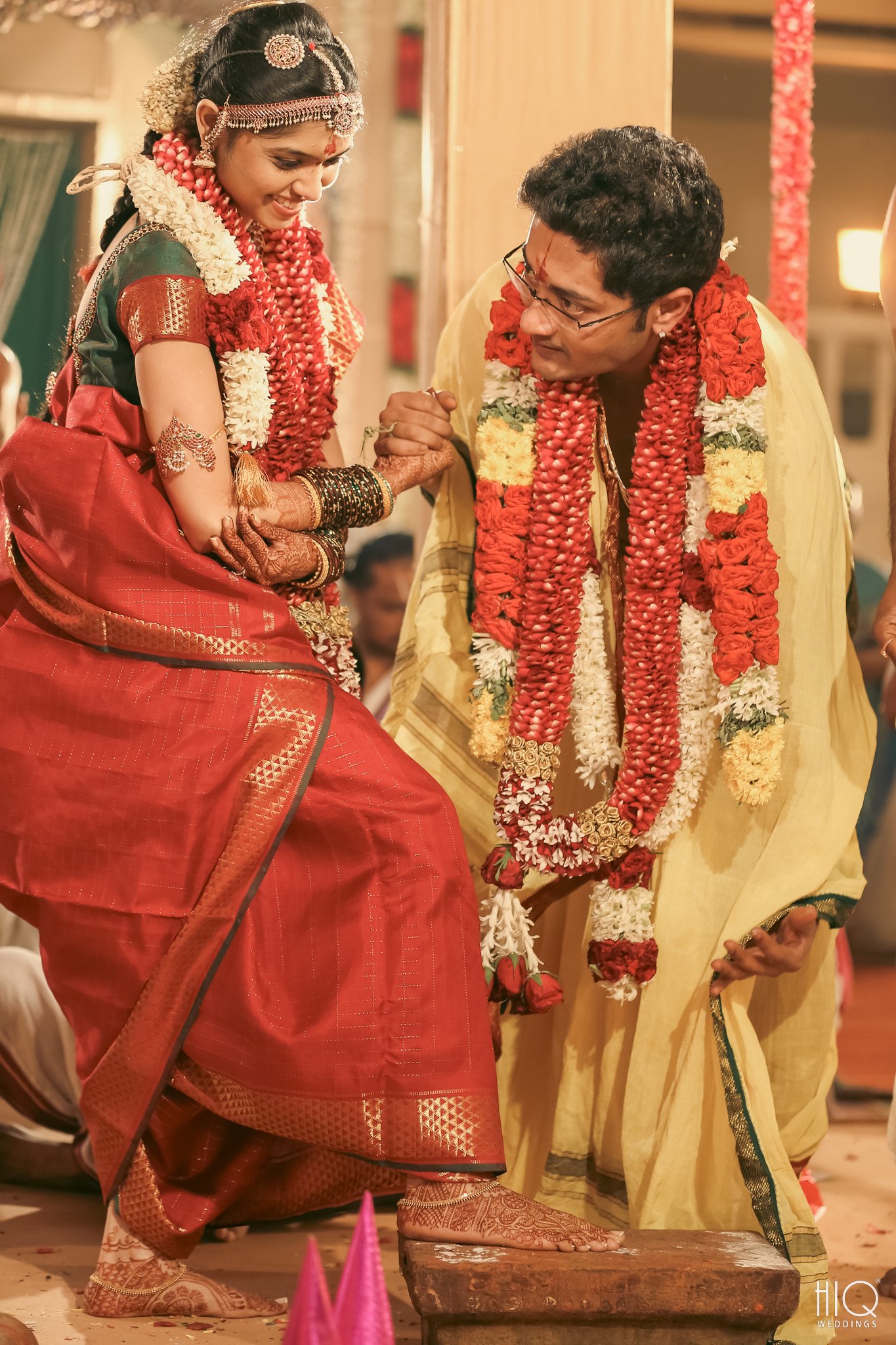
14. Saptapadi (Seven Sacred Steps)
Bride and groom walk together around the sacred fire, taking seven steps.
Each step signifies a vow — prosperity, strength, mutual respect, family, health, happiness, and spiritual growth.
It completes the legal and spiritual aspect of the marriage.
15. Homam & Pradakshina
The couple performs fire offerings together.
They walk around the fire thrice, signifying unity and the witness of the divine.
Prayers are offered to deities like Agni, Vishnu, and Lakshmi.
Post-Wedding Rituals
16. Grihapravesham (Bride’s Entry to Groom’s Home)
The bride is welcomed into her new home with a traditional Aarti.
She steps in by gently kicking a pot of rice, symbolizing prosperity and abundance she brings to the family.
She is often seated in the puja room for blessings.
17. Reception
A non-religious celebration where the newlyweds are introduced to extended family and friends.
Gifts are exchanged, and food is served in a grand festive manner.
In modern weddings, this is often held on the evening of the wedding or the day after.
Conclusion
Tamil Brahmin weddings combine spirituality, family traditions, Vedic rituals, and joy. Every step, from the Kanyadaanam to the Saptapadi, is rich in meaning and symbolism, blending ancient values with community celebration.